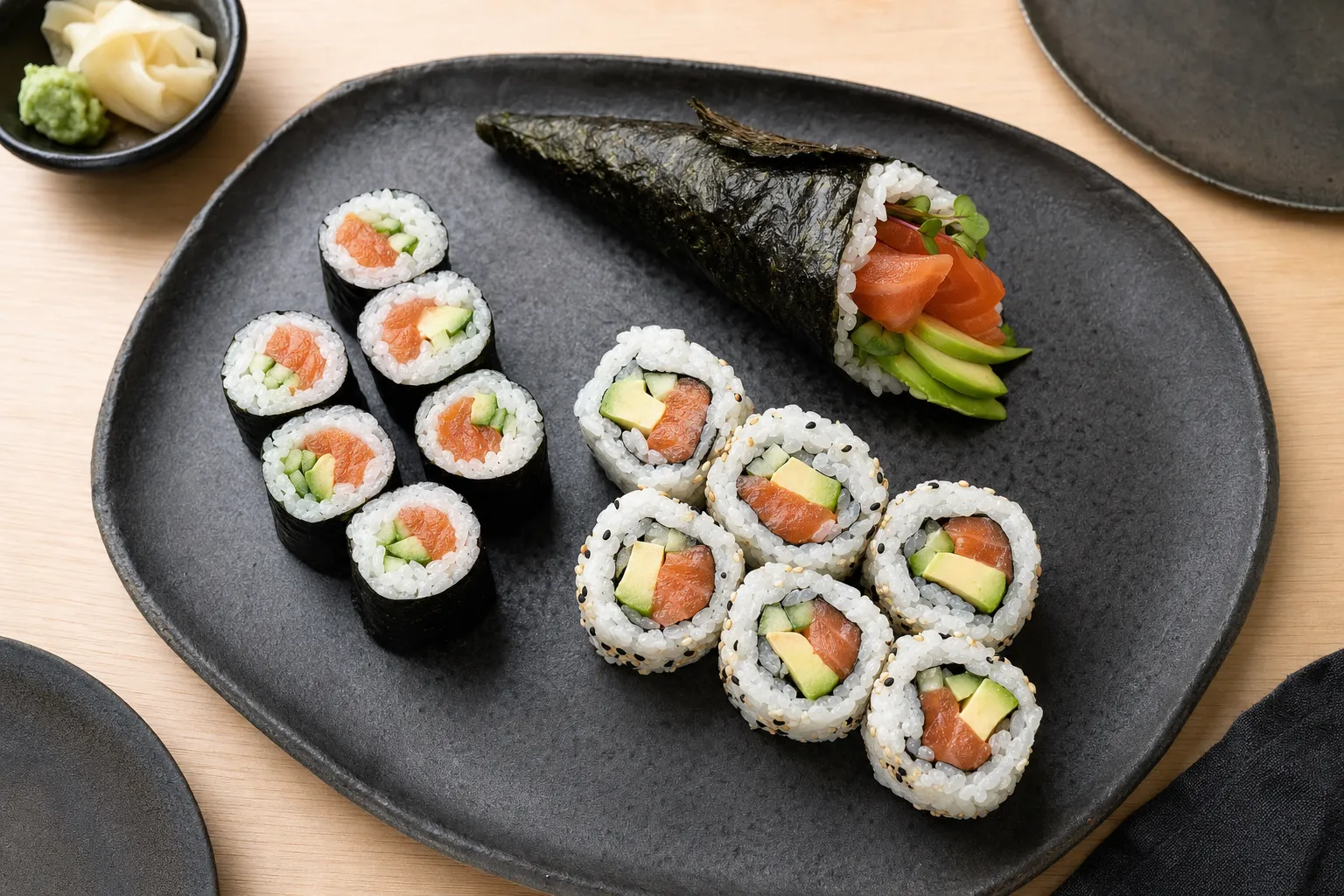
Sushi rolls are easiest to understand when you look at how they are wrapped. Maki has nori on the outside. Uramaki turns that inside out, with rice on the outside. Hosomaki is thin, futomaki is thick, and temaki is the hand roll you eat right away. The filling can be raw fish, cooked seafood, egg, vegetables, or a mix. At SUGARFISH, the Trust Me menus finish with hand rolls folded to order, because the crisp nori is part of the point.
The names can sound more complicated than the food is. Most rolls fit into a few useful forms, and those forms tell you what kind of bite to expect. Start with the wrapper, then look at the filling. That is enough to make a sushi menu feel much more familiar.
The short guide to sushi roll names
Think of “maki” as the family name for rolled sushi. The other words usually describe the size, the direction of the roll, or the way it is meant to be eaten.
| Roll style | How it is made | What to expect |
|---|---|---|
| Hosomaki | A thin nori roll with rice and a simple filling | A focused, clean bite |
| Futomaki | A thick nori roll with several fillings | A fuller mix of textures and flavors |
| Uramaki | An inside-out roll with rice on the outside | A familiar style for many American sushi diners |
| Temaki | A cone-shaped hand roll | Eat it promptly while the nori is crisp |
| Cut roll | A larger roll sliced into pieces | Could be maki, uramaki, or a restaurant-specific creation |
The Japan National Tourism Organization’s guide to sushi in Japan is useful background for the larger idea: sushi begins with seasoned rice, while the many forms describe how that rice meets a topping or filling.

1. Hosomaki: the thin roll
Hosomaki is a slim roll, usually made with nori on the outside, a layer of sushi rice, and one main filling. Cucumber, tuna, salmon, and yellowtail are all examples of ingredients that can work in a simple roll, depending on the restaurant.
Because the filling is restrained, a hosomaki makes it easier to notice one ingredient at a time. It is a useful choice when you already know you like a particular fish or vegetable and want a clean, direct bite. When the fish name is the unfamiliar part of the menu, our guide to sushi fish types can help you decide between familiar choices and something new.
2. Futomaki: the thick roll
Futomaki is the larger counterpart to hosomaki. It is usually wrapped in nori and carries several fillings, which can include vegetables, egg, cooked seafood, or fish. A thicker roll creates more contrast in one bite, so it often feels like a small composed meal rather than a simple taste of one ingredient.
That variety can be appealing, but it also makes the name on a menu less predictive. Two futomaki rolls can be very different from each other. Read the ingredients, then ask about anything unfamiliar. A roll name is a starting point. The ingredient list is what tells you whether it is light, rich, cooked, raw, crisp, or creamy.

3. Uramaki: the inside-out roll
Uramaki is an inside-out roll. Instead of nori showing on the outside, the rice faces out and the nori sits around the filling. Sesame seeds, roe, or other toppings may be added to the outer rice. California rolls are a common example of the style, though ingredients vary from one restaurant to another.
The form is especially common on American sushi menus, which is why many diners recognize it before they know its name. The rice-forward exterior can make the roll feel softer and more substantial than a thin nori-forward roll. If you prefer cooked ingredients, the guide to cooked sushi explains familiar roll fillings such as cooked shrimp, eel, egg, and imitation crab.
4. Temaki: the hand roll
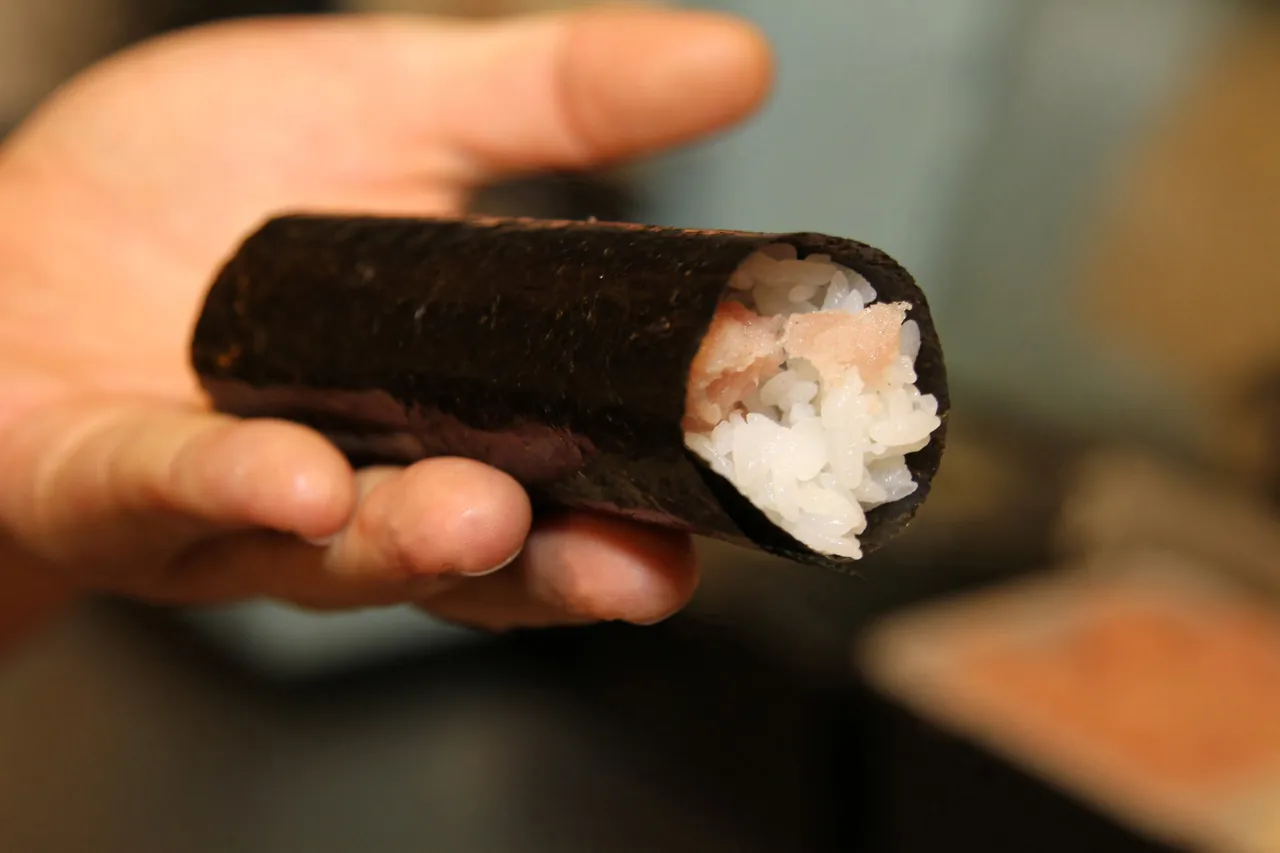
Temaki is a hand roll, shaped like a cone rather than cut into rounds. Nori wraps around rice and filling, and the open end makes the ingredients easy to see. It is meant to be eaten with your hands and eaten promptly. Once the nori sits against warm rice, it starts to soften, so the texture changes quickly.
That timing is why hand rolls feel different from a cut roll, even when the ingredients overlap. A cut roll is built to sit on a plate in pieces. A hand roll arrives as one immediate bite, with crisp nori around the outside. Our guide to eating sushi properly covers the simple etiquette: use your hands if that is easiest, take a bite while it is fresh, and do not overthink it.
5. Cut rolls: a format, not one recipe
“Cut roll” is a useful menu description, but it does not identify one traditional recipe. It simply means a rolled piece of sushi has been sliced into several portions. The roll might be a straightforward maki, an inside-out uramaki, or a restaurant’s own combination of fillings, sauce, and toppings.
For that reason, it helps to separate format from flavor. The format tells you how the food will arrive. The fillings tell you what you are actually ordering. A roll with tuna and cucumber will taste very different from one with tempura shrimp, avocado, and a sweet sauce, even when both arrive as neat round pieces on a plate.
6. What the filling tells you
A sushi roll can be raw, cooked, vegetarian, or mixed. Raw fish is common, but it is not what makes something sushi. The seasoned rice does that work. A roll may contain salmon, tuna, yellowtail, cooked shrimp, eel, tamago, cucumber, avocado, or other ingredients, depending on the restaurant.
When you are deciding what to order, begin with the texture you want. Choose a simple fish or vegetable roll when you want something clean and direct. Choose a larger roll when you want more ingredients in the same bite. Choose a hand roll when you are ready for the crisp nori to be part of the experience. If a menu does not make the ingredients clear, ask. A direct question is more useful than trying to decode a creative roll name alone.
How sushi rolls fit at SUGARFISH
SUGARFISH keeps the Trust Me experience focused on a progression of sashimi, nigiri, and hand rolls. You will not find California rolls or spicy tuna rolls on the menu. Instead, the hand rolls arrive as part of the meal, folded to order so the nori is still crisp when they reach the table.
That is a different idea from choosing among a long list of cut rolls. The Trust Me menus are designed to move from one course to the next, with fish cut to order and warm rice at the center of each bite. You can see the current Trust Me menus before your visit, then choose the option that matches your appetite.
When you are ready to dine, pick a nearby SUGARFISH location. Bring your full party, let the team know about food allergies before ordering, and enjoy the hand roll when it arrives.
Start with the wrapper, then choose the filling.
Thin rolls, thick rolls, inside-out rolls, and hand rolls each offer a different kind of bite. You only need to know which sounds good right now.
Explore the Trust Me menus →