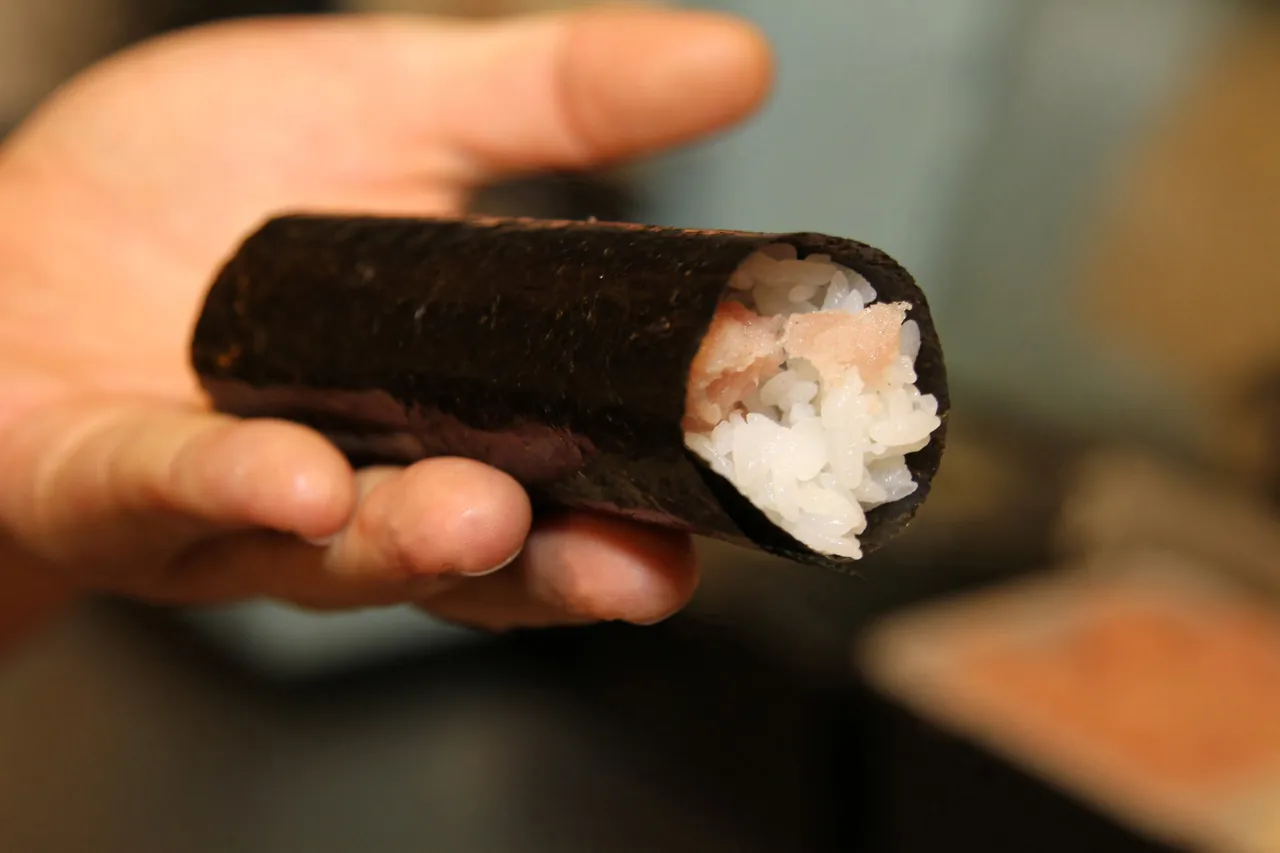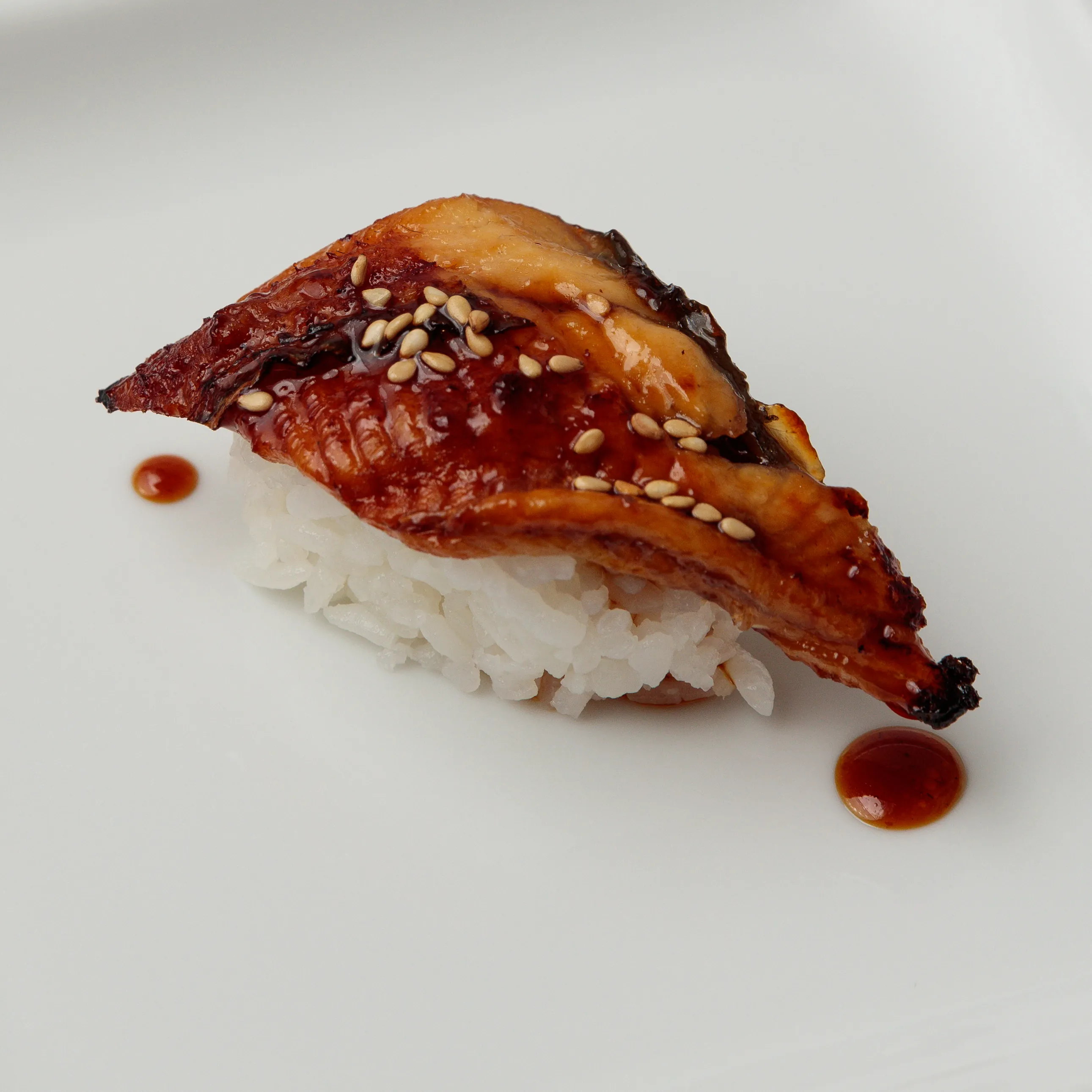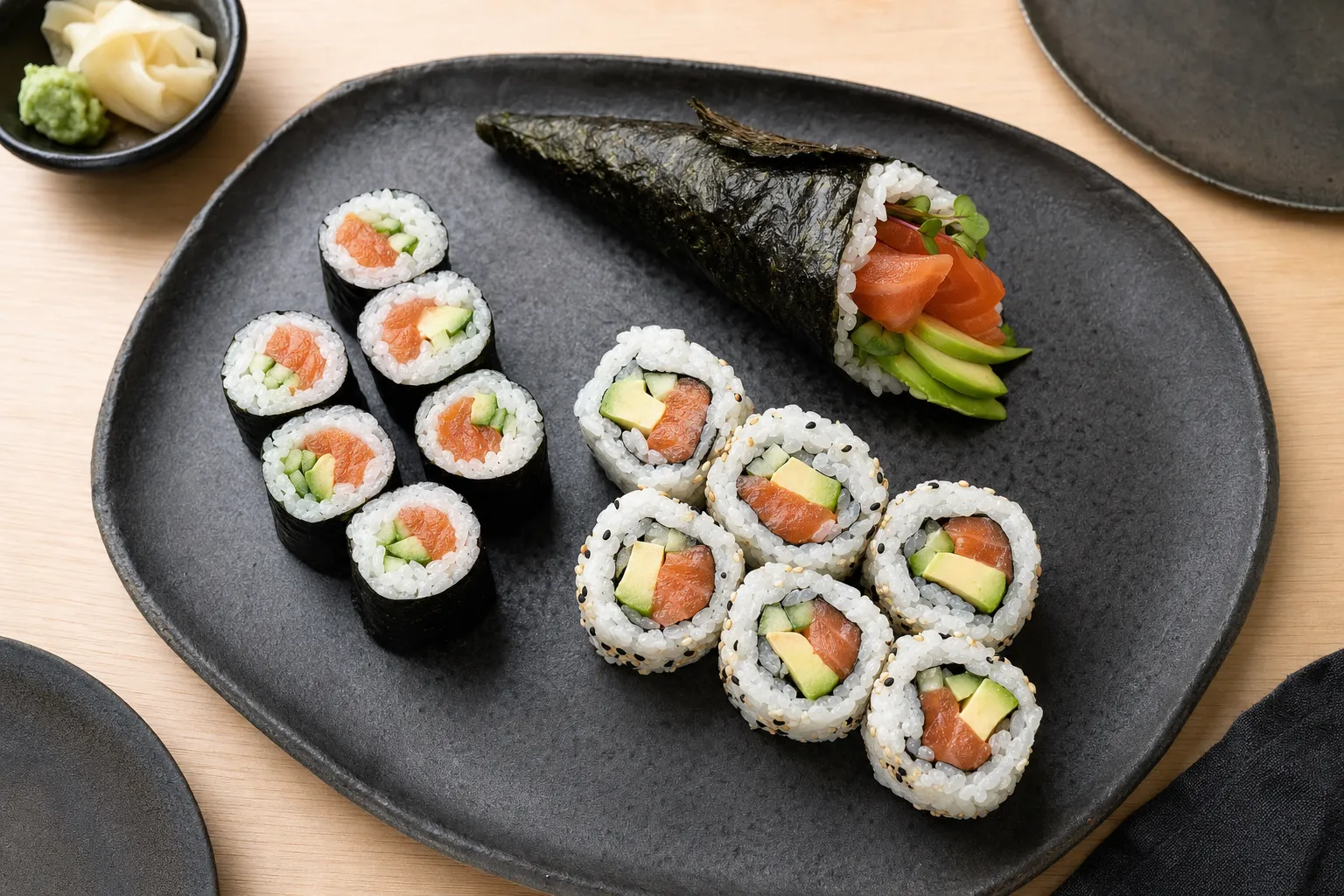
Sushi rice is short-grain rice that is cooked, then seasoned with a vinegar mixture. It is the defining base of sushi, including nigiri and rolls, rather than a side dish placed under the fish. The seasoning gives the rice a gentle brightness, while its texture lets it hold together for one composed bite. At SUGARFISH, the rice is served warm and loosely packed, so it meets the fish with the temperature and texture the piece was made to have.
Sushi rice is seasoned rice, not plain white rice
“Sushi rice” can name both the rice used for sushi and the finished, seasoned preparation. For a diner, the useful distinction is simple: the rice in a piece of nigiri has been made to carry more than structure. It brings seasoning, softness, and a little warmth to the fish above it.
That is why sushi is not defined only by raw fish. The Japan National Tourism Organization’s sushi guide describes sushi as a preparation built around vinegared rice. Fish, egg, vegetables, or other ingredients can change, but the seasoned rice is the common thread. Sashimi is different because it is served without rice.
Short grain gives the rice its place in the bite
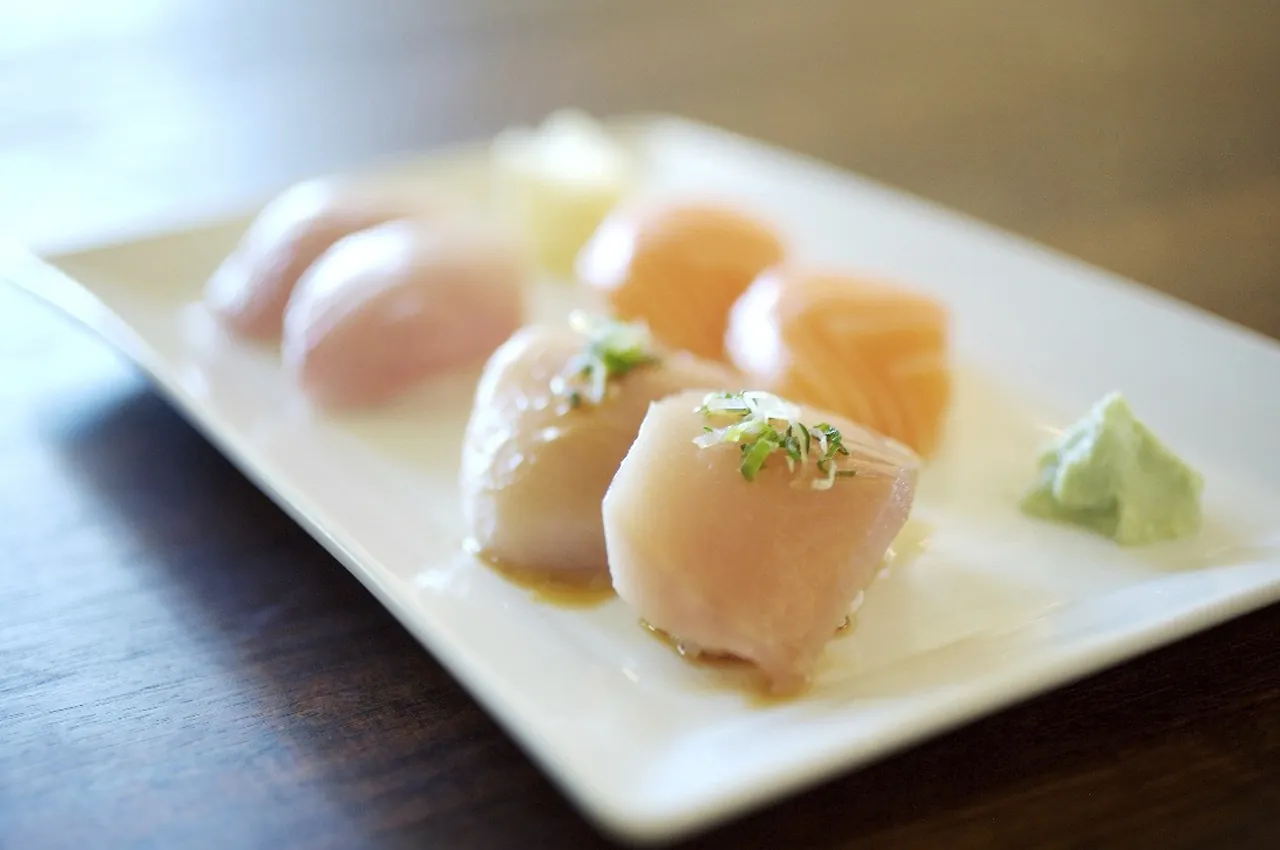
Sushi rice is usually made from short-grain Japanese-style rice. The grains cling together enough to be formed for nigiri or rolled in nori, but the finished rice should still separate gently when you eat it. A packed clump is not the goal.
That texture is especially easy to notice in nigiri. The rice has to support the topping while still yielding quickly in the mouth. If you want the larger menu picture, our sushi, sashimi, and nigiri comparison explains how rice changes the difference between those three preparations.
Vinegar gives sushi rice its recognizable flavor
After cooking, the rice is seasoned with a vinegar mixture. That is the reason sushi rice tastes different from a bowl of plain steamed rice. The seasoning is meant to support the fish or filling, not announce itself as the loudest flavor on the plate.
In a restaurant, that balance matters piece by piece. A richer fish can need a different contrast from a more delicate one. A roll can hold more ingredients at once. Nigiri puts the relationship between fish and rice in full view. The rice does not disappear beneath the topping. It changes the flavor and texture of the entire bite.
Plain steamed rice changes the whole preparation
Plain white rice can be delicious, but it is not automatically sushi rice. Without the vinegar seasoning, it does not bring the same light acidity to the fish or filling. With a grain that is too dry, too loose, or too firm, a nigiri piece also loses the gentle cohesion that lets the topping and rice reach your mouth together.
This is why a sushi recipe starts with the rice before it moves to the fish. The rice needs to be seasoned, handled carefully, and shaped for the preparation it will become. For a roll, it has to hold a filling inside nori. For nigiri, it has to support the topping without becoming a dense base. The same ingredient has a different job depending on what the chef builds with it.
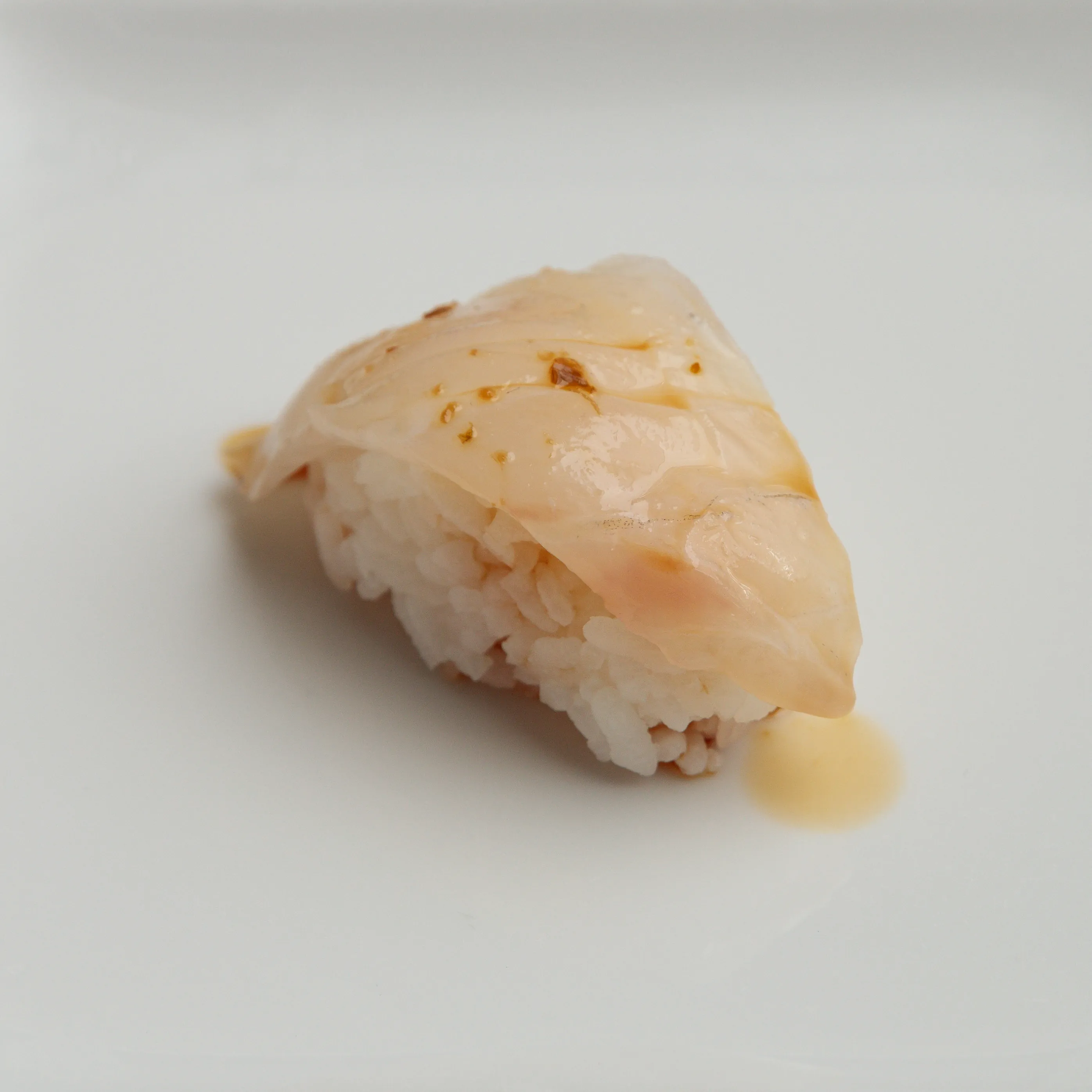
Warm rice changes nigiri at the table
Restaurant sushi rice is often served warm, not cold from the refrigerator. At SUGARFISH, the rice is warm and loosely packed, while the fish is cut to order. That contrast is part of why a piece of nigiri is best eaten when it arrives.
The goal is not to make the fish warm. It is to let the rice carry its seasoning and softness underneath the fish while the temperatures are still distinct. Our approach to sushi explains why the timing matters, and the sushi etiquette guide gives a practical way to enjoy each piece without overthinking it.
A balanced nigiri gives rice and fish equal attention
The easiest way to notice sushi rice is to pay attention before adding anything. First, the rice should stay together long enough to lift the piece without squeezing it. Then it should yield quickly, so it does not turn the bite into a mouthful of rice beneath the fish. Finally, the seasoning should be present without covering the topping.
That balance is why portion matters. Too much rice can hide a delicate fish. Too little can leave the topping without the contrast that makes nigiri distinct from sashimi. When a piece arrives already seasoned, taste it before reaching for soy sauce. You may find the rice, fish, and seasoning already have the relationship the chef intended.
Cohesive does not mean gummy
People often call sushi rice “sticky” because the grains hold together. That is useful shorthand, but it can give the wrong impression. A well-made piece of nigiri should be cohesive enough to travel from plate to hand or chopsticks, then soft enough to come apart naturally as you eat it. The rice should not feel like a dense, gluey ball beneath the fish.
The distinction matters because sushi is a composed bite. The rice has to stay present without taking over, just as the seasoning has to be noticeable without becoming sharp. In a hand roll, cohesion keeps the filling in place. In nigiri, it protects the relationship between the topping and the rice until the moment you take the bite. For a diner, the test is simple: the piece should feel light when you lift it, then release cleanly once you eat it. The rice should support the fish without making the bite feel heavy.
Sushi rice and rice for a roll do different jobs
| Preparation | What the rice does | What to notice |
|---|---|---|
| Nigiri | Creates one balanced base for the topping | Temperature, softness, and the fish-to-rice proportion |
| Roll | Holds the filling together inside or around nori | The contrast between rice, nori, and several ingredients |
| Chirashi | Forms the seasoned base of a bowl | How the toppings and rice combine from bite to bite |
The same seasoned rice can appear in each preparation, but the experience changes with the form. Nigiri is the most direct way to taste rice and fish together. A roll adds nori and filling. Chirashi gives you more freedom to combine toppings and rice at your own pace. Our guide to sushi types is useful when you want to place those names on a menu.
Eat nigiri when it reaches you
Nigiri is made as one bite, so there is little reason to pull it apart. Pick it up with your fingers or chopsticks, add soy sauce only when you want it, and eat it while the rice is still warm. A light touch on the fish side keeps the rice from soaking up more soy sauce than it needs.
At SUGARFISH, the Trust Me menus move from sashimi to nigiri and hand rolls, so you can taste how the same meal changes from fish on its own to fish over rice and then to crisp nori around a filling. The menu is prepared in sequence, which lets every piece arrive when its texture is ready.
Rice is the quiet part that changes the whole piece
A good piece of sushi is not fish placed on a neutral platform. The rice carries the seasoning, texture, and warmth that make the topping feel complete. Once you notice that, the difference between sashimi, nigiri, and a hand roll becomes easier to taste, even when the fish is the same.
For a first visit to SUGARFISH, choose the Trust Me menu that suits your appetite, then enjoy each course as it arrives. The format gives the rice, fish, and hand rolls their own moment instead of asking you to manage every decision at once.