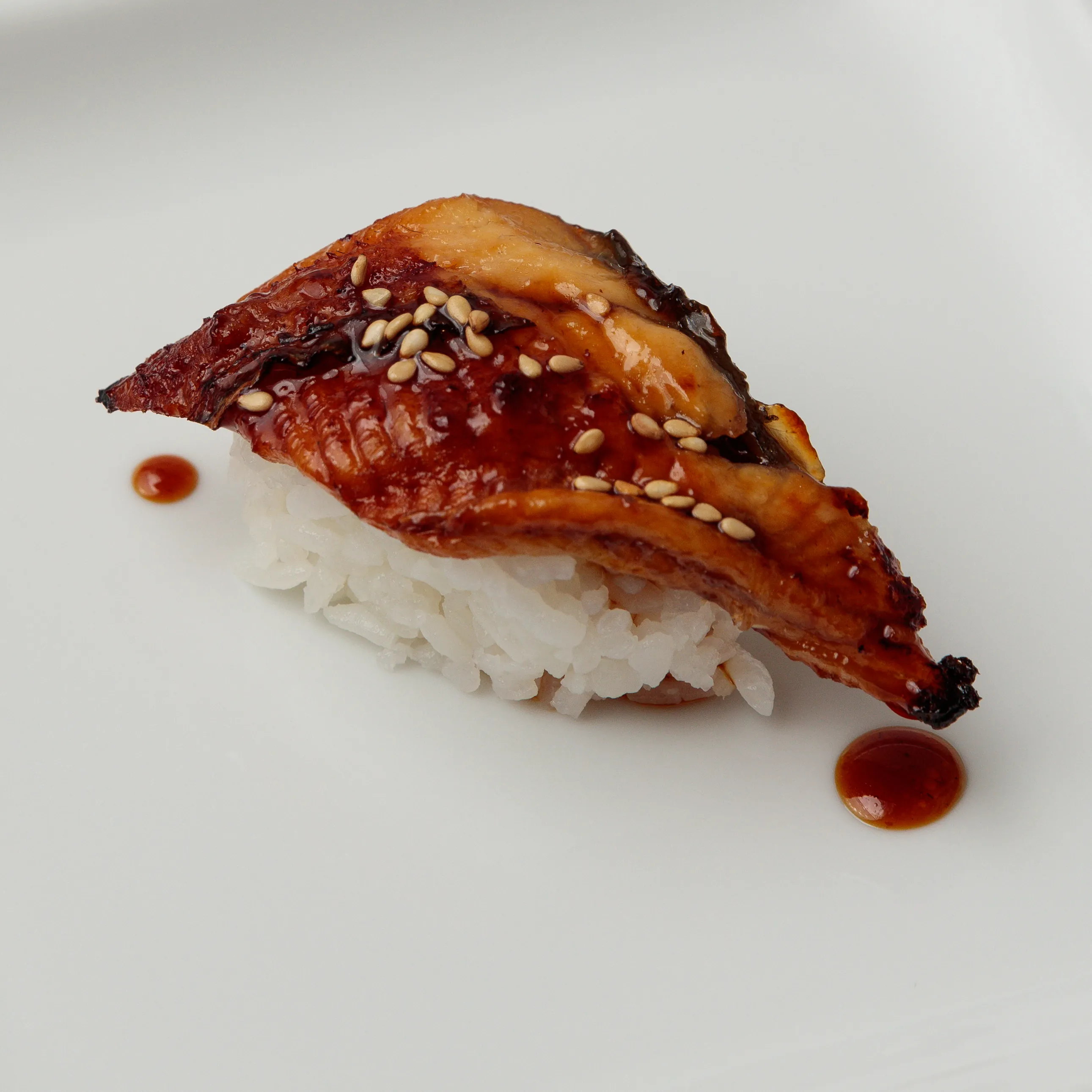

The proper way to eat sushi is the way that lets you enjoy the piece in front of you. For nigiri, use your fingers or chopsticks, take a light touch of soy sauce on the fish side if it needs it, and eat it while the rice is still warm. Eat pickled ginger on its own between different pieces, and taste before adding wasabi. The goal is not ceremony. It is to keep the fish, rice, seasoning, and texture in balance.
That balance is especially noticeable with sushi served one piece at a time. At SUGARFISH, fish is cut to order, the rice is served warm, and hand rolls are folded to order. Each piece is meant to be enjoyed right away, while its temperature and texture are exactly where they should be.
1. Know what is on your plate
A little menu vocabulary removes most of the uncertainty. Nigiri is fish or another topping over a small hand-formed piece of seasoned rice. Sashimi is sliced seafood without rice. Maki is rolled sushi, and temaki is a hand roll with nori wrapped around the rice and filling.
Each format asks for a slightly different approach. Nigiri is a single composed bite. Sashimi is easy to pick up with chopsticks. A hand roll should be eaten promptly while the nori is still crisp. Our guide to sushi types explains the forms in more detail, so you can read a menu without guessing.
The useful rule is simple: let the shape tell you how to handle the piece. There is no need to memorize a long set of rules before sitting down.
2. Use fingers or chopsticks for nigiri
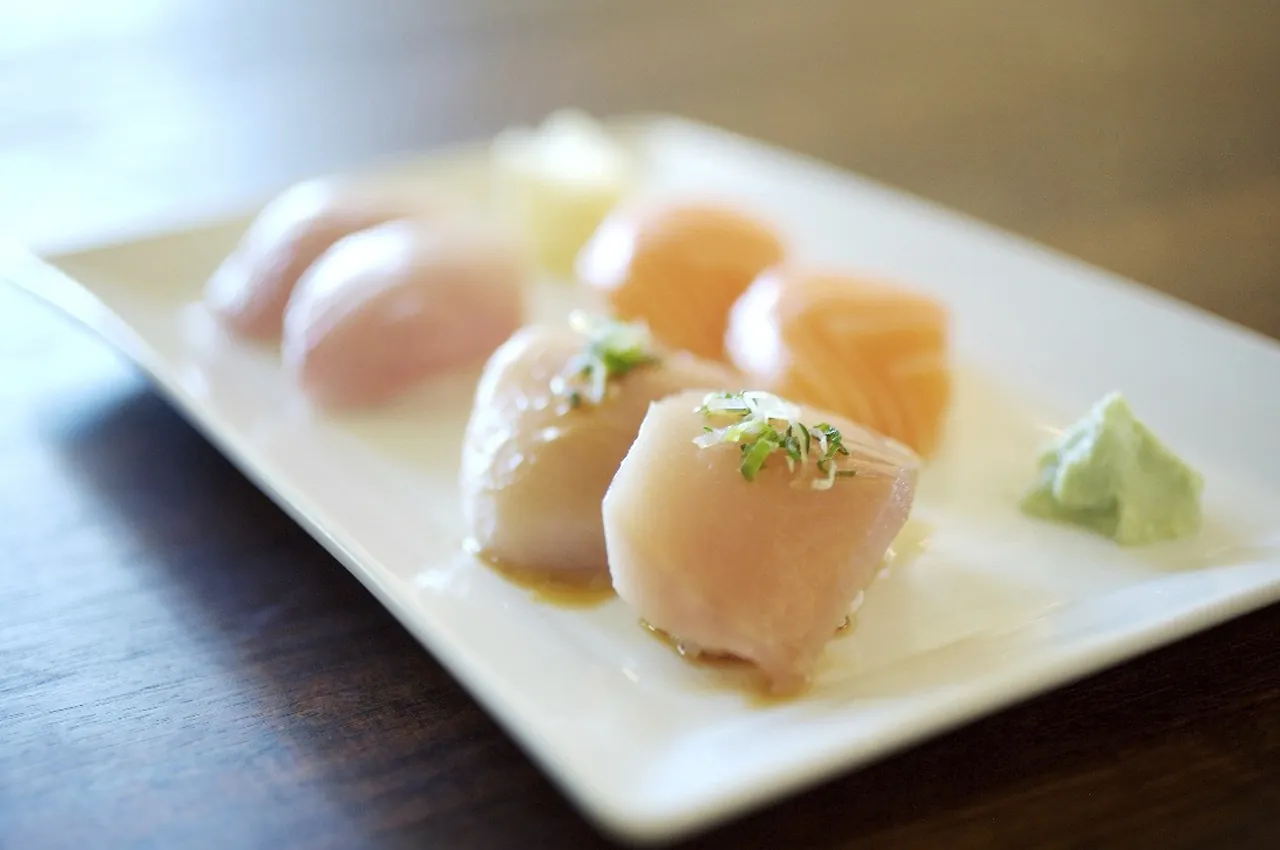
Using your fingers for nigiri is completely appropriate. It can also be the gentler choice, because you can lift the piece from the sides without squeezing the rice. Chopsticks are fine, too. The right choice is the one that keeps the fish and rice together on the way to your mouth.
When the piece is a comfortable size, eat it in one bite. Nigiri is prepared as a single balance of fish, warm rice, and seasoning. If it is too large for one bite, take two without worrying about perfection. The important part is to avoid pulling it apart before you taste it.
The Sushi Yasuda guide to sushi traditions makes the same point: there are no strict rules, only customs that help the food taste its best.
3. Use soy sauce lightly
Pour a small amount of soy sauce into the dish. With nigiri, turn the piece gently and touch only the fish or topping to the sauce. The rice has already been seasoned with vinegar, and it can absorb too much soy sauce quickly. That can make the bite salty and cause the rice to break apart.
Some pieces arrive already brushed with sauce or seasoned by the chef. Taste those first. More soy sauce is not automatically better, especially when the fish, rice, and seasoning have already been composed as one bite.
For sashimi, a light touch of soy sauce on the edge of the fish is enough. The MATCHA guide to eating sushi also recommends dipping the topping rather than the rice, so the rice stays intact and the seasoning does not overpower the piece.
4. Eat a hand roll as soon as it arrives
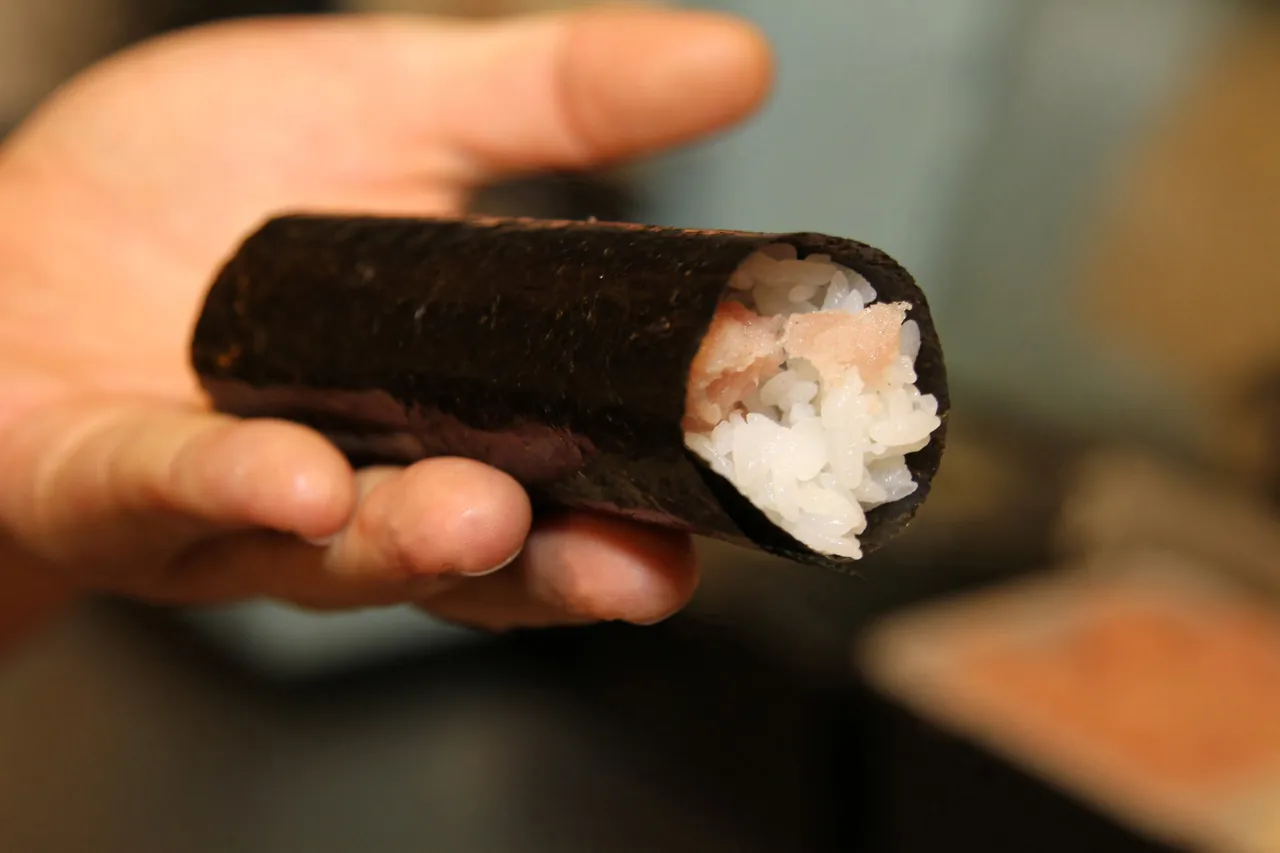
A hand roll is built around contrast: crisp nori on the outside, rice and filling inside. It changes quickly after it is made. Pick it up with your hands, take a bite while the nori is still crisp, and let the roll do its job without waiting.
This is one of the clearest cases where timing matters more than etiquette. At SUGARFISH, hand rolls are folded to order and served as part of the Trust Me progression. They are meant to be eaten when they reach the table, not saved for later.
For a closer look at the full sequence, from sashimi through the final hand roll, see the Trust Me menus.
5. Give wasabi and ginger different jobs
Wasabi adds aroma and heat. If a piece already includes wasabi, taste it before adding more. Mixing wasabi into soy sauce is common, but it makes it harder to notice how the chef seasoned the fish and rice. Add a little more directly to a piece only when you want a stronger note.
Pickled ginger, or gari, is for clearing your palate between different pieces. Eat a small slice on its own after a richer fish or before moving to something more delicate. It is not meant to sit on top of nigiri or become a filling in the bite.
Those distinctions are helpful, not mandatory. They give you a cleaner taste of each piece, then leave you free to enjoy the meal in the way that feels most natural.

6. Follow the pace of the meal
If a chef or server sends sushi out in sequence, eat it in the order it arrives. That pacing protects the details that are easiest to lose: warm rice beneath cool fish, a hand roll with crisp nori, and seasoning that has not been sitting on the plate.
When you are ordering individual pieces, beginning with a lighter fish before richer or more strongly flavored fish can make the progression easier to taste. Pickled ginger gives you a reset between them. But a fixed order is never more important than eating what you are excited to try.
The best question to ask is often the simplest one: what is especially good today? A direct recommendation makes room for the menu and the market to guide your next bite.
7. Enjoy a Trust Me meal at SUGARFISH
A Trust Me menu is designed to remove the pressure of building an order piece by piece. Choose the menu that suits your appetite, then let the meal move from sashimi to nigiri and hand rolls. Each course arrives when it is ready to eat, with no substitutions to distract from the intended progression.
For first-time diners, arrive when your full party is ready. SUGARFISH seats guests first come, first served, rather than taking reservations. From there, the practical work is done. You can focus on the sushi in front of you, then the next piece when it arrives.
Choose a nearby SUGARFISH location when you are ready to visit. Diners planning a meal in California can also read about omakase sushi in Los Angeles, while New York guests can find the same Trust Me experience in the New York City guide.
Use a light touch, eat each piece while it is at its best, and enjoy the meal.
That is all the etiquette most sushi needs.
Find your SUGARFISH →