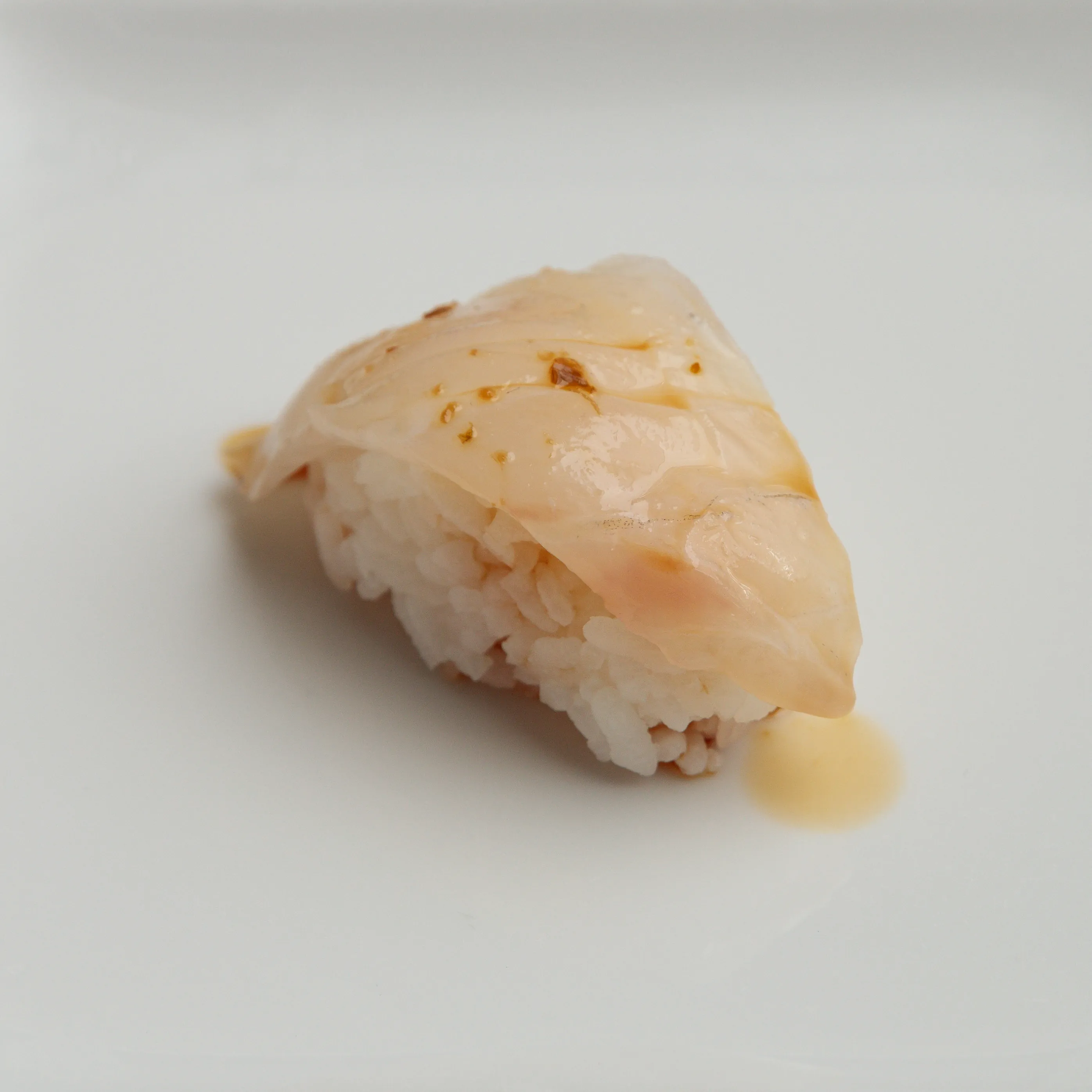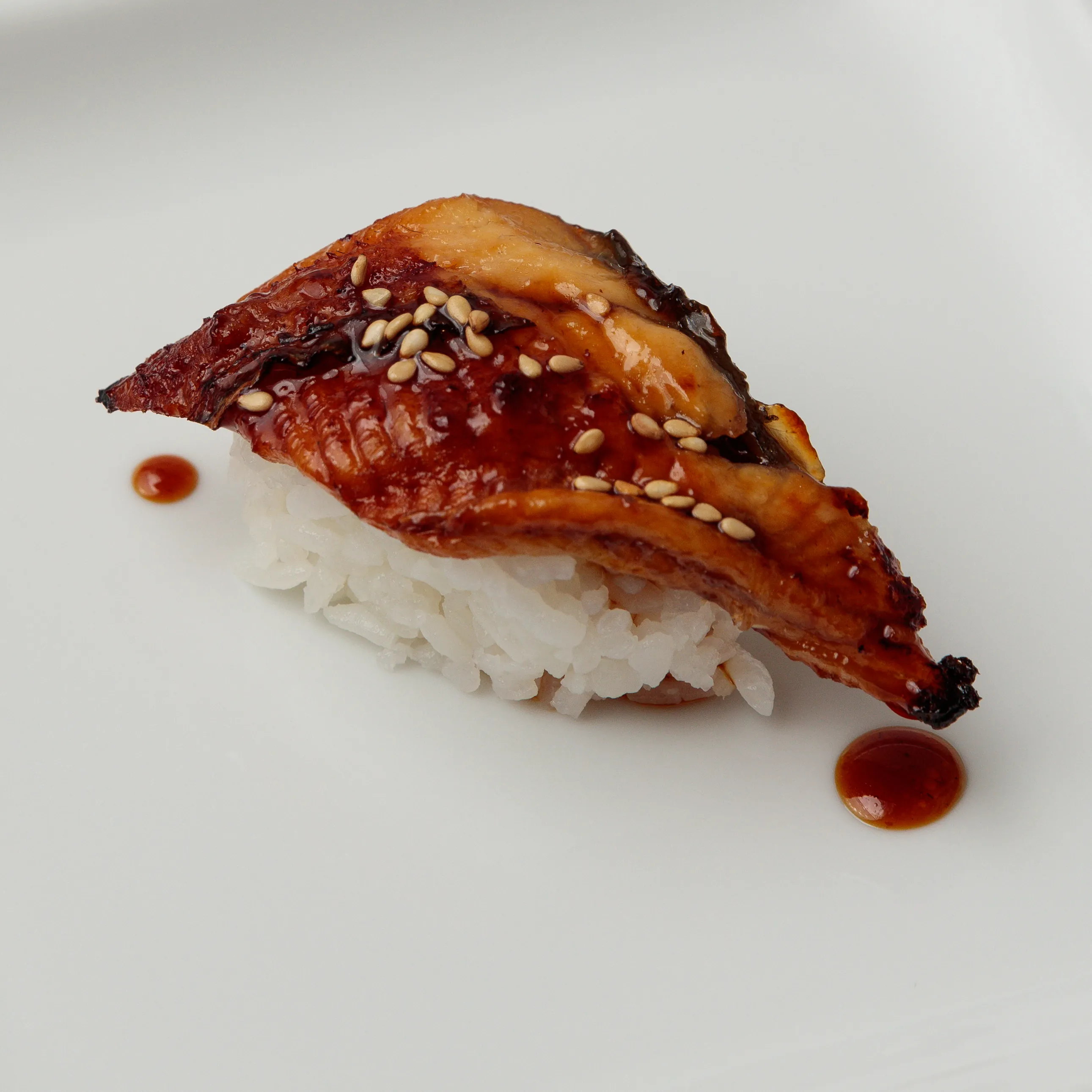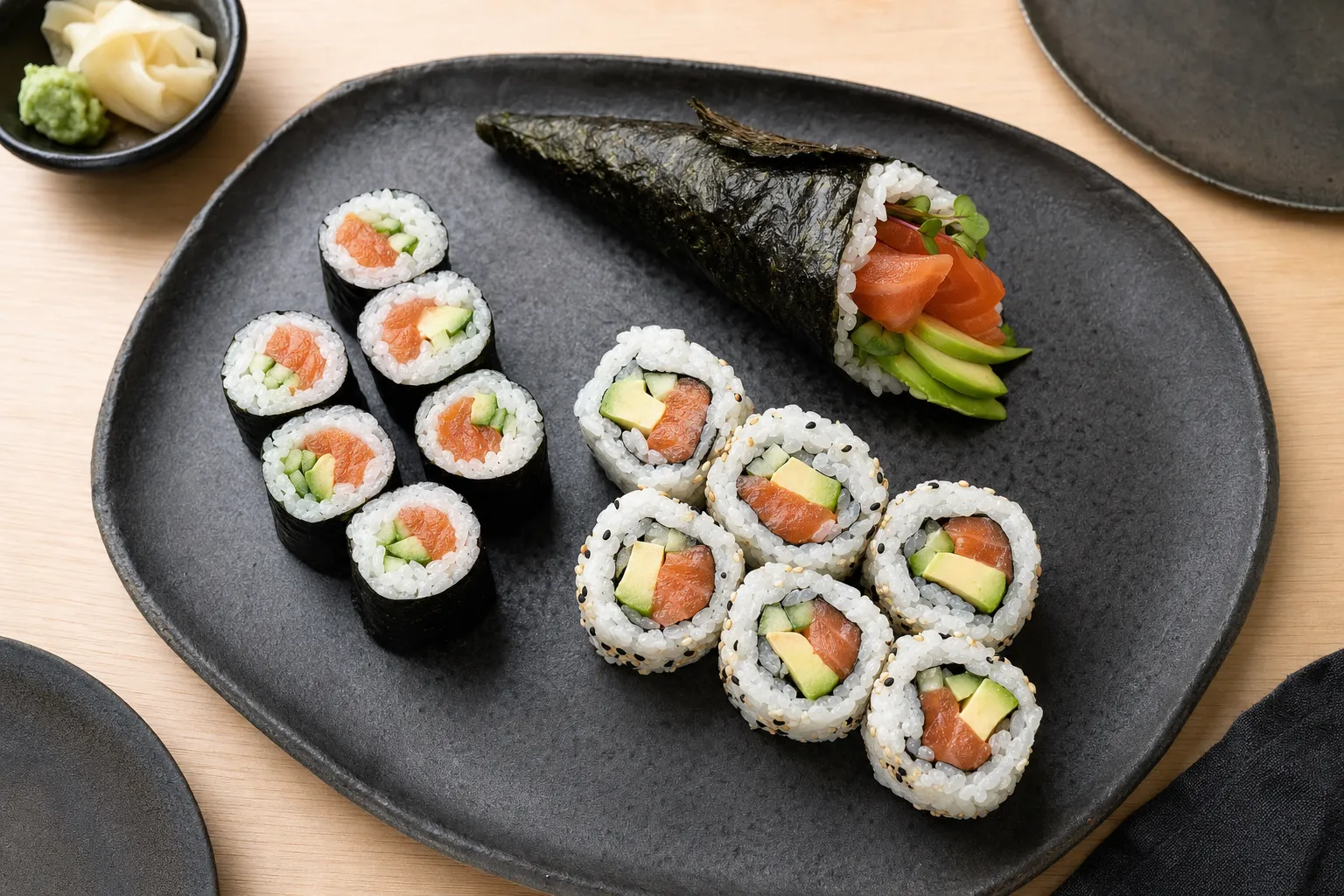
Sushi, sashimi, and nigiri are three different ways to enjoy seafood. Sushi is seasoned rice paired with an ingredient or topping. Sashimi is sliced seafood without rice. Nigiri is a small hand-formed piece of sushi rice topped with fish or another ingredient. The easiest way to remember it is this: sashimi is fish on its own, nigiri is fish over rice, and sushi is the wider category that includes nigiri and rolls.
They can feature the same fish and still feel completely different at the table. The difference is not only the ingredient list. It is the role of the rice, the shape of the bite, and the way each preparation is served. At SUGARFISH, a Trust Me meal uses that contrast deliberately, moving from sashimi to nigiri and then hand rolls.
The difference at a glance
| Style | What it is | What you taste first |
|---|---|---|
| Sushi | Seasoned rice paired with a topping or filling | The relationship between rice, seasoning, and the ingredient |
| Sashimi | Sliced seafood served without rice | The fish and its texture |
| Nigiri | A hand-formed piece of sushi rice topped with fish or another ingredient | The contrast of fish and rice in one bite |
The Japan National Tourism Organization’s sushi guide uses the same foundation: sushi starts with seasoned rice, while the form tells you how it is served. That distinction is useful because menu language often puts the fish name first, even though the preparation changes the experience.
Sushi starts with the rice
Sushi is the broadest term of the three. It refers to seasoned rice combined with a topping, filling, or accompaniment. A sushi menu can include nigiri, rolls, hand rolls, chirashi, inari, and other preparations, each with a different proportion of rice, fish, nori, or vegetables.
That is why “sushi” does not automatically mean raw fish. A sushi preparation can feature raw seafood, cooked seafood, egg, vegetables, or tofu. The rice is the common thread. When the form on a menu is unfamiliar, first ask whether you are looking at a rice-based sushi preparation or a fish-only sashimi preparation. Our guide to sushi types has a broader look at the forms you will see most often.

Sashimi keeps the focus on the fish
Sashimi is sliced seafood served without sushi rice. Because there is no rice beneath it, the cut, texture, and flavor of the fish take center stage. A sashimi course can feel clean and direct, especially when you are trying to understand a fish before tasting it in another form.
Sashimi and sushi often appear together on the same menu, so the two are easy to confuse. The difference is simple once you look at the plate. If the seafood arrives by itself, it is sashimi. If it comes with seasoned rice, it is sushi. The fish name may be identical in both preparations, but the bite is not.
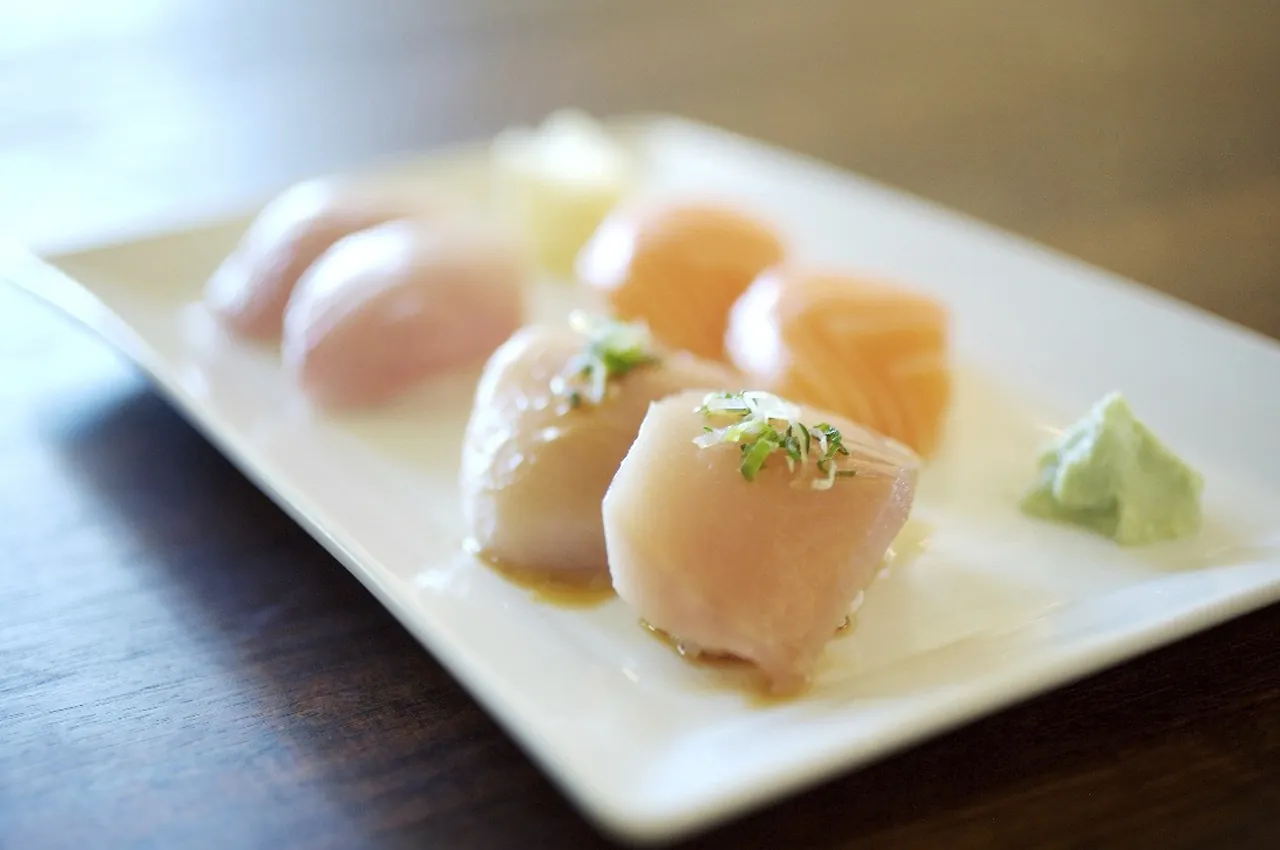
Nigiri brings fish and rice together
Nigiri is a type of sushi made from a small hand-formed portion of rice topped with fish, seafood, egg, or another ingredient. It is usually meant to be eaten as one composed bite, so the topping, rice, and seasoning stay in balance.
At SUGARFISH, nigiri is served with warm, loosely packed rice and fish cut to order. That is why the best time to eat it is when it arrives. The rice and fish are meant to meet at the table, not wait while the next course is decided. For a closer look at the names you may see on top, read our guide to sushi fish types.
Three questions make the choice easy
When a sushi menu puts an unfamiliar fish name in front of you, the form is a quicker place to begin than the ingredient. Ask whether you want to taste the seafood by itself, whether you want it paired with rice, or whether you want a more layered bite with nori and filling. Those three choices point naturally to sashimi, nigiri, or another sushi form.
That approach also keeps a menu from feeling like a test. You do not need to know every Japanese term before you order. A sashimi course will be direct and rice-free. A nigiri course will bring the fish and rice together in one bite. A roll changes the format again, often with more texture and more than one ingredient. The name of the fish tells you what is on the plate. The form tells you how you will experience it.
There is room to choose differently across the same meal. Start with sashimi when you want a clean taste of the fish. Follow it with nigiri when you want to notice what warm rice adds. Save a hand roll for the moment you are ready to eat it right away, while the nori is crisp. The sequence can be simple because each format has a distinct job. A helpful server can also tell you which fish is especially good that day, then you can choose the preparation that sounds right.
The same fish can play three different roles
The useful choice is not which form is “better.” It is what you want from the next bite. Sashimi lets a fish stand alone. Nigiri adds the temperature and texture of seasoned rice. Sushi rolls and hand rolls add another layer, often nori and a more complete mix of ingredients.
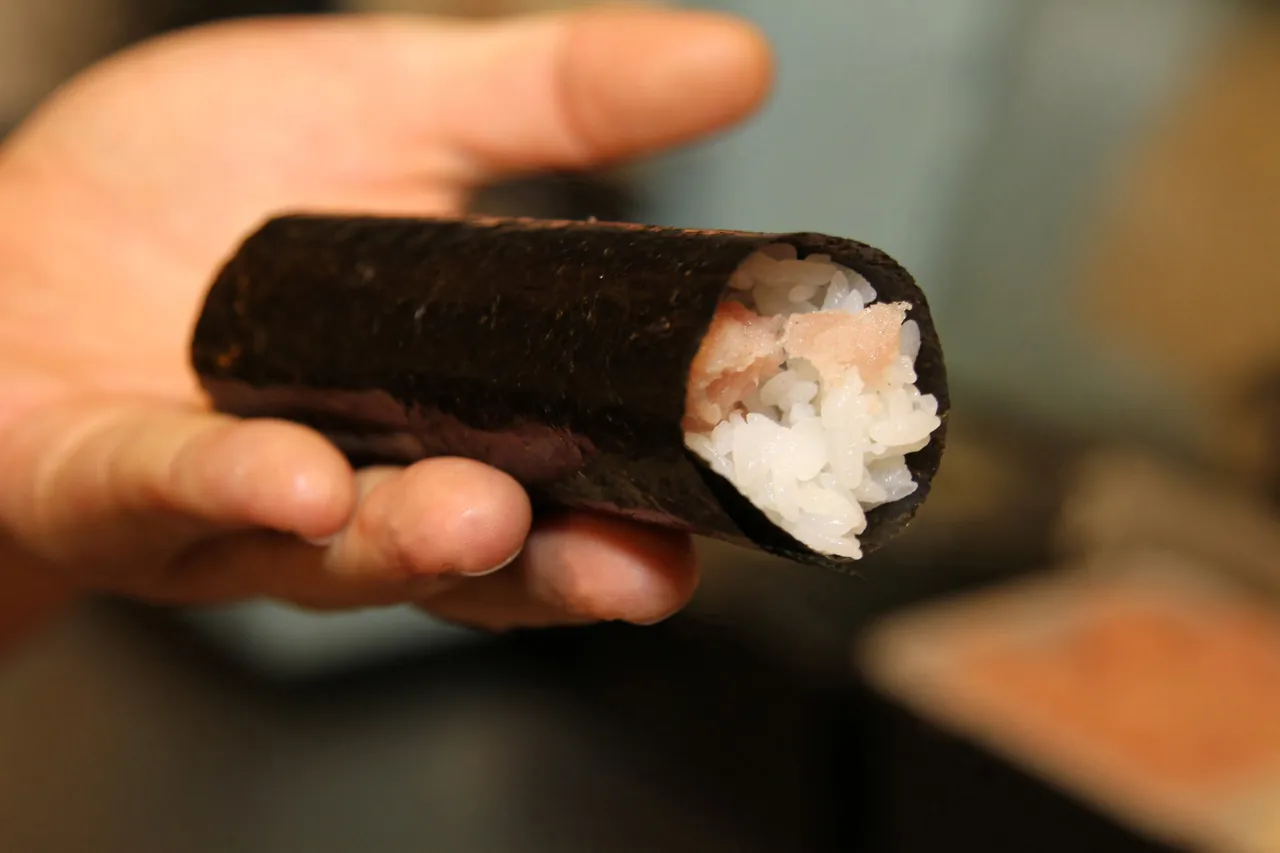
That contrast is built into the Trust Me progression. The meal begins with sashimi, moves into nigiri, and finishes with hand rolls. Fish is cut to order, rice is served warm, and the hand rolls are folded to order so the nori is still crisp. It gives the table a way to taste different preparations without turning the meal into a long list of separate decisions.
When you see the same fish in more than one place on a menu, the preparation is the clue. Choose sashimi when you want the fish by itself. Choose nigiri when you want fish and rice together. Choose a hand roll when you want a more immediate bite with crisp nori. The answer can change from one course to the next.
Choose based on the meal you want
Start with sashimi when you want to focus on the seafood itself. Choose nigiri when you want the balance of fish and rice in one bite. Choose a roll or hand roll when texture, nori, and filling are part of what sounds good. None of these choices requires a rulebook. The preparation tells you what kind of experience the plate is designed to offer.
If you are visiting SUGARFISH for the first time, the Trust Me menus give you all three ideas in a set progression, without asking you to build the order piece by piece. Pick the menu that fits your appetite, then enjoy each course as it reaches the table. For a restaurant near you, see all SUGARFISH locations.
Read the rice before you read the fish.
Sashimi is fish on its own. Nigiri is fish over rice. Sushi is the larger family that brings seasoned rice together with a topping or filling.
Explore the Trust Me menus →